You pull into traffic just as the morning light breaks over the highway, a warm cup of coffee rattling softly in the center console. Your hands rest gently at ten and two on the steering wheel, right over the embossed logo of the car you trust to bring you home every evening. It is a quiet, physical faith we all share. You assume the safety systems waiting behind that plastic cover are dormant, perfect, and absolute. There is a comfortable rhythm to the daily commute, a predictable hum of tires on asphalt that lulls you into a sense of total security.
Yet, materials age in ways that evade the naked eye. We all remember the endless headlines from a few years ago, the frantic notices about Takata. We collectively breathed a sigh, assuming the automotive industry had purged that specific ghost from the assembly lines forever. We believed the replacement parts and new suppliers had engineered the danger out of existence. But chemistry operates on its own timeline, quietly breaking down compounds while your car bakes in a crowded office parking lot.
The reality breaking across the automotive landscape right now involves a staggering 30 million airbag inflators from a completely different major supplier. The chemical propellant tucked inside these newer inflators is degrading under extreme temperature fluctuations. What was supposed to be a stable lifesaver has turned into a volatile wildcard, secretly brewing an excessive charge right behind the horn pad you press in traffic.
It feels profoundly unfair to realize a solved problem has simply shifted its nameplate. You are not dealing with a manufacturing defect in the traditional sense of a loose bolt or a frayed wire, but an organic degradation of materials over time. It is an unsettling reminder that the machines we rely on are subjected to the slow, invisible forces of nature, no matter how much steel and glass surrounds them.
The Alchemy of an Aging Cabin
Think of the inflator not as a mechanical pump, but as a sealed canister of highly reactive baking powder sitting in a humid kitchen cabinet. Over a decade of 100-degree summers and freezing winter nights, moisture slowly permeates the microscopic pores of the metal seal. The compound inside does not just lose its potency; it alters its structural behavior, turning from a controlled burn into a violently rapid reaction when the ignition signal is sent during a collision.
This sudden, excessive pressure shatters the metal housing instead of simply filling the airbag cushion with gas. The very mechanism designed to catch you like a pillow suddenly turns into a fragmentation hazard. The realization that an entirely separate supplier used a different compound that suffers from a similar creeping decay forces us to look at our vehicles differently, recognizing them as aging chemical environments rather than just mechanical tools.
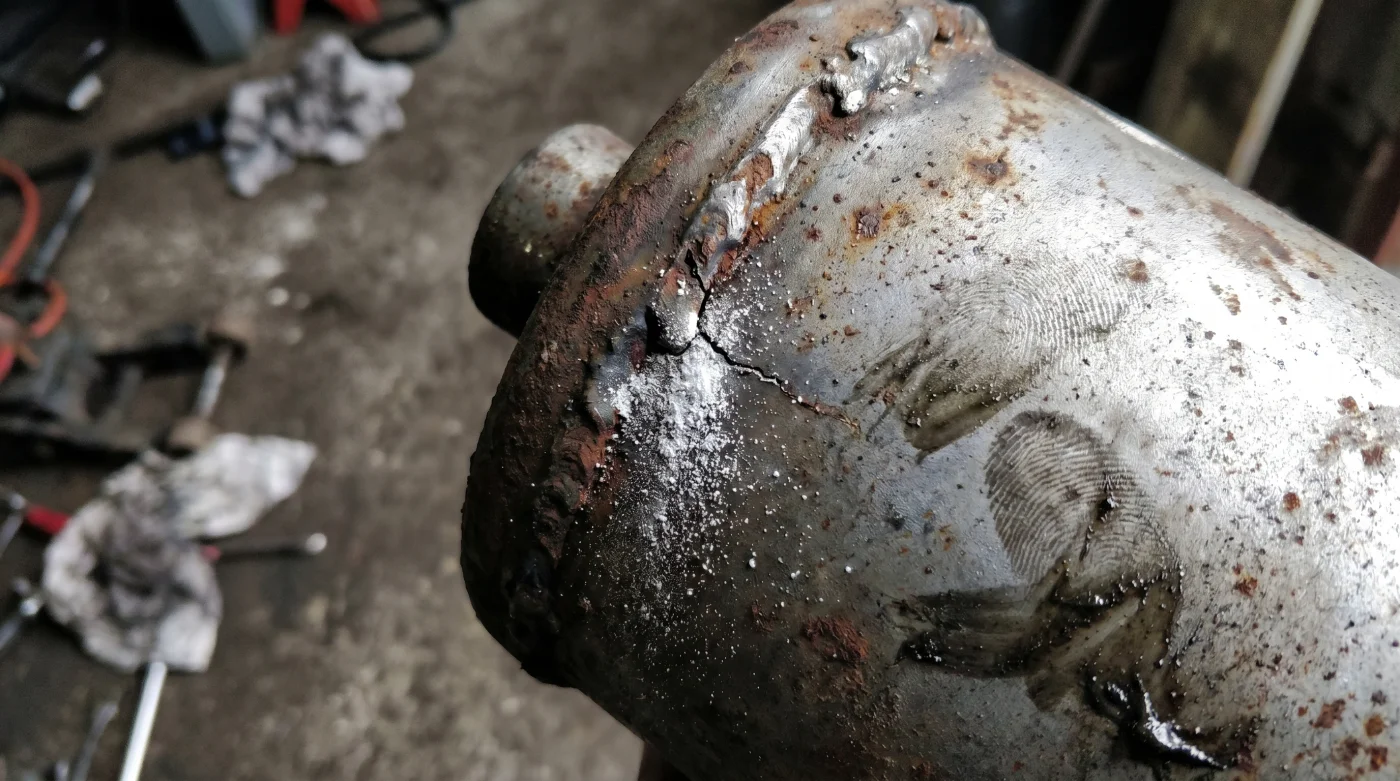
Elias Thorne, a 58-year-old metallurgical forensic engineer based outside Detroit, has spent the last decade x-raying deployed inflator housings. He recently began tracking microscopic stress fractures in units far removed from the original Takata batches. While sitting in his cluttered lab, holding a fractured steel canister from a popular 2016 commuter sedan, Elias noted, ‘We trusted the alternative propellants to remain inert, but the humidity of the American South is a relentless force. It bakes the moisture right through the microscopic pores of the metal seals, slowly turning a safety device into a liability.’
Knowing Your Commuter’s Risk Profile
Your immediate environment matters more than the mileage on the odometer. Not every car will experience this chemical breakdown at the same rate. The heat and humidity your commuter vehicle absorbs dictate the urgency of the situation. It is vital to assess how and where your car spends its downtime.
For the Sun-Belt Resident: If you live in Florida, Texas, or Southern California, your vehicle is operating in a high-risk atmospheric pressure cooker. The daily thermal cycling from cool mornings to scorching afternoons accelerates the chemical decay. Your priority is immediate verification, as the degradation curve in these climates is steep and unforgiving.
- The hidden structural change in the new Tesla Model Y that nobody is talking about
- The hidden structural change in the new Tesla Model Y that nobody is talking about
- The specific month you should buy a Kia Telluride to avoid the massive dealer markup
- The specific month you should buy a Kia Telluride to avoid the massive dealer markup
- The fatal engineering flaw pushing Subaru Outback owners to buy Toyota RAV4s
- The fatal engineering flaw pushing Subaru Outback owners to buy Toyota RAV4s
- The $15 OBD2 Scanner trick that instantly reveals if a used car was recently in a flood
- The $15 OBD2 Scanner trick that instantly reveals if a used car was recently in a flood
- Dealerships are hiding the best Ford F-150 trim for maximum towing capacity
- Dealerships are hiding the best Ford F-150 trim for maximum towing capacity
Your missing maintenance records matter heavily if you purchase vehicles from the pre-owned market. The used car market is a haven for lost paperwork and disconnected communication lines. If you bought your commuter car from a third-party seller, the manufacturer has no idea you own it. The mailed notices are piling up in the mailbox of the previous owner, leaving you completely unaware of the ticking clock behind the dashboard.
For the Northern Garage-Kept Driver: You might think you are insulated from the severe heat, but the chemical breakdown still occurs, albeit at a slower pace. The transition from a heated garage to freezing snowbanks creates a different type of thermal stress on the seals. Complacency is your biggest enemy here; the longer timeline often leads to forgotten notices and ignored warnings.
Mindful Steps Toward Resolution
Treat the verification process as a standard piece of seasonal maintenance, much like checking the tread on your tires before winter. Addressing this recall does not require panic, just deliberate, methodical action. It is a simple administrative task that carries immense physical weight.
Gather your specific details before making any phone calls or scheduling appointments. Arm yourself with the exact figures and codes tied to your chassis so you can bypass the general customer service runaround and get straight to the facts.
- Locate your 17-character Vehicle Identification Number (VIN) on the lower driver-side corner of the windshield or inside the driver’s door jamb.
- Open the official NHTSA recall lookup tool on your smartphone or computer.
- Type the VIN exactly as it appears, paying close attention to zeros and the letter O to avoid false negatives.
- If your vehicle is flagged, call your local authorized dealership immediately to verify parts availability.
- Ask specifically for a recall loaner vehicle or alternative transportation if the replacement modules are currently on backorder.
Reclaiming the Quiet Commute
We ask so much of our daily drivers. They are our mobile dining rooms, our private concert halls, and the steel cages that carry the people we love most. When an alert of this magnitude breaks, it fractures the quiet trust we have in our machines. It introduces anxiety into a space that is supposed to be your private sanctuary between the office and your living room.
Restoring that relationship requires only a few minutes of proactive investigation. You are not powerless against the slow degradation of automotive chemistry. By taking the time to verify the status of your inflator, you reclaim the peace of mind that makes a long drive home bearable. The steering wheel becomes, once again, just a steering wheel, allowing you to focus on the road ahead rather than the mechanics hidden behind the dash.
‘A car’s safety system should be a silent guardian, not an unpredictable variable; verify your VIN today and take the power back.’
| Key Point | Detail | Added Value for the Reader |
|---|---|---|
| Supplier Shift | The issue affects a completely different major parts manufacturer, not Takata. | Clarifies why newer or previously cleared cars are suddenly at risk again. |
| Environmental Trigger | High heat and humidity cause the chemical propellant to degrade over time. | Helps you assess personal risk based on your state and parking habits. |
| Cost of Repair | Federal law mandates that all recall repairs are completely free at dealerships. | Removes the financial hesitation of getting the vehicle inspected immediately. |
Frequently Asked Questions
Is this just another wave of the Takata recall?
No. This involves a staggering 30 million units from an entirely different tier-one supplier facing a similar but distinct chemical degradation issue.
Will the dealership charge me for the inspection?
Absolutely not. Recall inspections and the subsequent part replacements are entirely free of charge by federal mandate.
What if the replacement parts are currently on backorder?
Many manufacturers will provide a complimentary loaner vehicle or alternative transportation until the safe replacement part arrives at the service center.
Does parking in a garage prevent the chemical breakdown?
It slows the process down by reducing severe thermal cycling, but it does not completely stop the organic degradation of the propellant over a decade.
How long does the replacement procedure actually take?
The physical swap of the inflator module usually takes a trained technician under two hours, though dealership wait times will vary based on current volume.