The asphalt radiates a heavy, shimmering heat on a late August afternoon, with the thermometer pushing past ninety degrees Fahrenheit. The used car sitting on the lot smells aggressively like vanilla aerosol, masking the faint, stale air of a vehicle that has been sitting too long. You slide into the driver seat, feeling the stiff resistance of freshly shampooed upholstery. The paint outside holds a mirror-like glaze, and the dealer stands a few paces away, arms crossed, projecting quiet confidence. Visually, the machine is immaculate, sparkling under the harsh glare of the sun.
You follow the traditional advice handed down for decades by well-meaning parents and amateur mechanics. You run your fingers under the floor mats, feeling for residual dampness against the sound deadening material. You crouch down to inspect the steel seat rails, hunting for the faint bloom of rust that gives away a submerged past. You pull the oil dipstick, checking for a milky, coffee-colored froth that indicates a compromised engine block. Everything seems pristine, almost suspiciously perfect for a vehicle priced just below the current market value.
But standing water is a patient, invisible ghost. It evaporates from carpets and drains from interior door panels, leaving behind a deceptive, comforting dryness. What the standard visual inspection constantly misses is the silent rot happening inside the sealed copper arteries of the car. While metal body panels can be easily buffed and molded carpets replaced for a few hundred dollars, flooded wiring harnesses begin a slow decay that no amount of detailing spray can erase.
The actual, unvarnished truth lives directly behind the dashboard, buried safely in the digital memory of the engine control unit. Instead of trusting your nose, your fingertips, or a weak flashlight, you can bypass the entire physical illusion. A cheap piece of plastic the size of a deck of cards is about to reveal the exact history the previous owner tried to aggressively wash away.
The Nervous System Metaphor
Think of a modern vehicle not as a collection of static metal components, but as an active, breathing nervous system. When a car sits in waist-deep water, the moisture infiltrates the tight rubber weather seals around the wiring connectors. It is quite literally like breathing through a pillow for the delicate electrical signals trying to travel from the bumper sensors to the main computer. The dirty flood water introduces microscopic verdigris, turning highly conductive, bright copper into a stubborn, resistant barrier.
This added resistance does not trigger an immediate, catastrophic failure on the test drive. Instead, it creates a permanent historical record of voltage drops. When the engine control unit (ECU) asks a specific sensor for a reading, the corroded wire chokes the electrical current, forcing the system to work harder. The computer continually registers this struggle as a tiny voltage anomaly. Long after the interior cabin has bone-dried in the summer heat, those electrical scars remain permanently etched in the system’s live data.
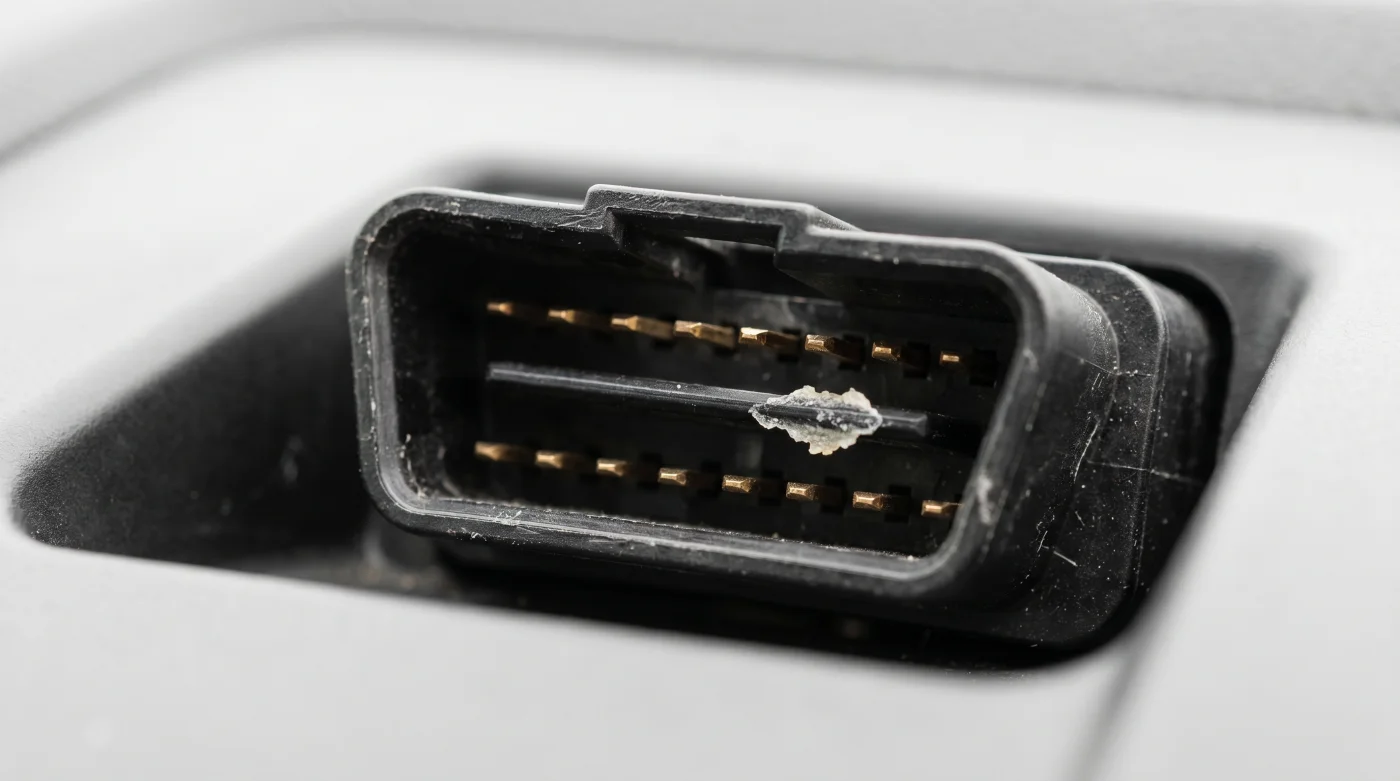
This is where your inspection strategy shifts drastically from hoping to knowing. By simply plugging a standard $15 OBD2 scanner into the diagnostic port located under the steering wheel, you intercept this hidden, internal communication. You are no longer looking for orange rust on steel; you are actively reading the electrical pulse of the machine. If the car has taken an unexpected bath, the voltage numbers will fluctuate wildly, exposing the exact water damage the fresh vanilla scent is trying so desperately to cover up.
Marcus, a 54-year-old master diagnostic technician working in the hurricane-prone humidity of coastal Florida, rarely bothers looking at the floorboards anymore. Last September, a client brought him a stunning two-year-old sedan shipped down from a known flood zone. The leather interior was absolutely flawless. Marcus ignored the pristine cabin, plugged in his pocket scanner, pulled up the live voltage data, and watched the numbers jitter and crash like a bad heart monitor. “Water doesn’t care about your wax job,” he noted, casually handing the small scanner back to the disappointed client. The car was mechanically totaled, quietly saved from a disastrous purchase by a fifteen-dollar piece of plastic.
- Dealerships are hiding the best Ford F-150 trim for maximum towing capacity
- Dealerships are hiding the best Ford F-150 trim for maximum towing capacity
- Mechanics reveal the 5-minute fluid rule that pushes a CVT transmission past 200,000 miles
- Mechanics reveal the 5-minute fluid rule that pushes a CVT transmission past 200,000 miles
- Why ignoring the TRD Pro for the base Toyota Tacoma is the smartest financial move of 2024
- Why ignoring the TRD Pro for the base Toyota Tacoma is the smartest financial move of 2024
- The simple maintenance habit quietly destroying your Honda CR-V resale value
- The simple maintenance habit quietly destroying your Honda CR-V resale value
- Sudden EV battery surplus forces unprecedented price cuts across major dealerships today
- Urgent recall issued for 30 million airbag inflators affecting highly popular commuter models
Filtering the Static: Reading the Signals
Not all buyers approach a gravel lot with the exact same needs, but the objective electrical truth applies across the board. You just have to know how to properly interpret the digital numbers flashing on the tiny LCD screen of your tool.
For the Daily Commuter
You need absolute, unflinching reliability for the morning rush hour. When you check the scanner on the lot, you want to see a steady, unwavering flow of power. If the battery physically shows 12.6 volts under the hood, but the live data feeding into the ECU is registering only 11.2 volts with the engine off, you are looking at a massive electrical leak. That missing voltage is getting trapped and burned off in corroded, water-damaged connection points. Walk away immediately before you find yourself stranded on the shoulder of the highway in the rain.
For the High-Mileage Gambler
You are actively looking for a deal, perfectly willing to accept some aesthetic wear and tear for a rock-bottom price. A digital scanner is your best friend in this scenario because it distinctly separates normal aging from catastrophic trauma. A 150,000-mile engine might have a slightly tired, aging alternator, causing a uniform, slow voltage drop across the entire electrical system. But if you see erratic, violently jumping voltage specifically on the lower oxygen sensors or transmission modules, that is not natural age. That is stagnant water sitting quietly in the low-hanging wiring harnesses.
The Pocket Diagnostic
Applying this method requires zero professional technical background, just a mindful, deliberate process. Leave the fast-talking dealer entirely out of the conversation. Sit in the driver seat, close the door firmly, and mentally isolate yourself with the machine.
Follow these specific, quiet steps to accurately read the current:
- Locate the OBD2 port, typically hidden just above the brake pedal or tucked behind a small plastic trim panel near your left knee.
- Plug in your scanner securely before ever putting the metal key in the ignition.
- Turn the key strictly to the ‘On’ position, but do not crank or start the engine. This powers the internal sensors without the spinning alternator artificially masking the voltage drops.
- Navigate directly to the ‘Live Data’ or ‘Data Stream’ menu on your handheld device.
- Scroll down carefully to the ‘Control Module Voltage’ or ‘ECU Voltage’ readout screen.
The Tactical Toolkit: You are looking closely for a healthy baseline of 12.0 to 12.6 volts. The digital number should sit perfectly still on the screen. If the reading fluctuates constantly by more than 0.3 volts, or sits dangerously below 11.5 volts while the dashboard lights are bright and the radio is off, the wiring is fatally compromised. The silent rot of flood water has already taken a firm hold.
Peace of Mind on the Pavement
Taking ownership of a heavy vehicle means legally adopting its history, its flaws, and its hidden baggage. Relying purely on someone else’s visual inspection leaves you entirely at the mercy of their personal honesty and a few cheap cans of air freshener. When you take the diagnostic process directly into your own hands, you shift the power dynamic completely in your favor.
Understanding the invisible electrical currents flowing silently beneath the floorboards grounds you deeply in the reality of the machine. You quickly stop being a passive buyer reacting to shiny paint and a washed engine bay, and become an active participant in uncovering the mechanical truth. A single plastic tool gives you the total clarity to reject a hidden disaster, allowing you to confidently drive away not just with a solid car, but with the quiet, unshakeable confidence that you saw exactly what others tried so hard to hide.
“The sheet metal lies, the upholstery lies, but the copper wire always tells you exactly what it has been through.”
| Key Point | Detail | Added Value for the Reader |
|---|---|---|
| Visual Inspection | Checking rails and carpets for rust or mold. | Easily defeated by heavy detailing and cheap replacement parts. |
| Historical Voltage | Reading ECU live data strictly with the engine off. | Exposes hidden wire corrosion that absolutely cannot be washed away. |
| The Hardware | A basic $15 OBD2 scanner with ‘Live Data’ capability. | Provides professional-level diagnostic shielding for the simple cost of lunch. |
Common Diagnostic Questions
Will any cheap OBD2 scanner work for this trick?
You need one that specifically features ‘Live Data’ or ‘Data Stream’ capabilities. The most basic code-readers only show check-engine lights, which will not actively display the live voltage needed to spot the hidden resistance.What if the dealer recently cleared the engine codes?
Clearing codes deletes the history of check-engine lights, but it absolutely cannot hide live data. The voltage drop is a physical reality happening in real-time within the copper wire, meaning a digital reset changes nothing.Can a standard bad battery mimic flood damage?
A dying battery will show a low overall voltage, but the reading will remain relatively stable. Flood damage uniquely causes erratic, jumping voltage readouts because the electrical connection is constantly fighting through layers of unseen green corrosion.Is it completely legal to plug my own scanner into a car on a lot?
Yes. The OBD2 port is specifically designed for open diagnostics. However, it is always polite and professional to simply inform the salesperson you are running a quick diagnostic check before proceeding.Does this inspection trick work on older classic cars?
This specific method strictly requires an OBD2 port, which became standard on all vehicles sold in the United States starting in the 1996 model year. For older vehicles, you must rely on testing with a traditional multimeter at the fuse box.