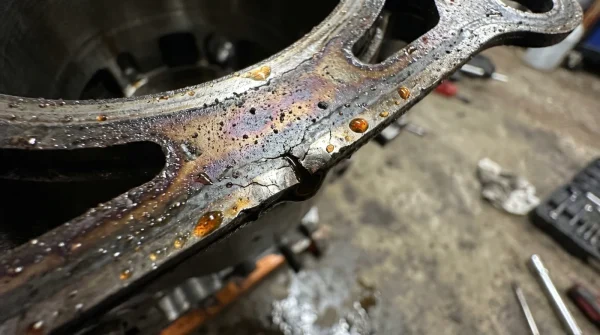
Picture a Tuesday morning on the interstate. The heater is finally pushing warm air, the coffee is still hot, and you press the gas pedal to merge. Instead of a smooth surge forward, you feel a hesitation. It is subtle at first. A faint, rubbery shudder vibrates through the floorboards, followed by a high-pitched whine that sounds like a distant siren.
That sound is the steel belt of your Continuously Variable Transmission, or CVT, slipping. By the time you hear it, the damage is already done. You pull into a shop, hoping for a minor sensor fix, only to be handed an estimate for four or five thousand dollars. The service writer shrugs and mentions something about the unit being a sealed system. You followed the manual perfectly, relying on the dealership’s promise that the fluid inside was meant to last forever.
But forever in the automotive world is a notoriously flexible concept. The reality hiding beneath the floorboards of millions of modern cars is that a CVT is a brilliant, delicate piece of engineering that operates under immense pressure and heat. It does not want to be ignored. It wants a simple, cheap intervention that the maintenance schedule deliberately leaves out.
The truth is, the most catastrophic mechanical failures rarely happen because of a defective part. They happen because of a flawed philosophy. Rethinking a single line in your owner’s manual transforms a fragile drivetrain into a two-hundred-thousand-mile workhorse.
The Myth of the Sealed Vault
Think of the typical automatic transmission as a heavy, cast-iron skillet. It can take abuse, burn a few meals, and still get the job done. A CVT, on the other hand, is a pair of high-carbon chef’s knives scraping against each other in a pool of oil. It relies on a heavy-duty steel belt moving between two adjustable pulleys. The only thing preventing those metal surfaces from destroying one another is a microscopic film of highly specialized fluid.
When a manufacturer tells you that this fluid is a lifetime component, they are playing a clever game of semantics. The lifetime they refer to is the length of the factory warranty. Once the warranty expires, your car’s problems are exclusively your own. Over tens of thousands of miles, the heat generated by the friction of that steel belt literally cooks the fluid. The chemical modifiers break down, the viscosity drops like water, and the protective film vanishes.
- Dealerships are hiding the best Ford F-150 trim for maximum towing capacity
- Mechanics reveal the 5-minute fluid rule that pushes a CVT transmission past 200,000 miles
- Dealerships are hiding the best Ford F-150 trim for maximum towing capacity
- Dealerships are hiding the best Ford F-150 trim for maximum towing capacity
- Dealerships are hiding the best Ford F-150 trim for maximum towing capacity
- Dealerships are hiding the best Ford F-150 trim for maximum towing capacity
- Dealerships are hiding the best Ford F-150 trim for maximum towing capacity
- Dealerships are hiding the best Ford F-150 trim for maximum towing capacity
- Dealerships are hiding the best Ford F-150 trim for maximum towing capacity
Ask Artie Vance, a 62-year-old transmission rebuilder who runs a dusty, cinder-block shop outside Cleveland. Artie spends his days surrounded by the metallic guts of failed CVTs. He points out a scarred pulley assembly on his bench, explaining that the fluid inside was dark as black coffee when it came in. He notes that they seal the dipstick tube and tell you not to worry, but if you cycle out three quarts of that lifetime fluid at thirty thousand miles, the belt never slips.
How You Drive Dictates How It Dies
Not all miles wear on the fluid equally. Your daily route creates a specific heat signature inside the gearbox, degrading the chemical additives at a different pace. Understanding your habits helps map out exactly when that fluid needs to be cycled out to match your specific driver profile.
For the Stop-and-Go Commuter: If your morning involves crawling through gridlock or bouncing from traffic light to traffic light, your CVT is constantly shifting its ratio. This endless expanding and contracting of the pulleys generates intense friction. The fluid here gets mechanically sheared. A thirty-thousand-mile swap is a strict requirement to prevent the belt from losing its grip when you finally hit the open road.
For the Highway Cruiser: Long stretches at seventy miles per hour might seem easy on a car, but they trap heat inside the transmission casing. Without the airflow breaks of slower driving, the fluid bakes at a constant high temperature. You might stretch the interval closer to forty thousand miles, but pay attention to the smell of the fluid if you check it. If it smells faintly of burnt toast, the protective barrier vanishes.
For the Weekend Hauler: Pushing a crossover with a trunk full of camping gear up a steep mountain grade is the absolute limit of what a CVT belt can handle. The extreme torque demand forces the belt to bite violently into the pulleys. Fresh fluid is the only buffer stopping a catastrophic mechanical failure under that extreme load.
The Mindful Maintenance Rule
Taking control of your CVT’s lifespan does not require an engineering degree or a garage full of specialized tools. It requires a quiet, deliberate shift in how you handle vehicle maintenance. You are no longer waiting for a dashboard light to tell you something is wrong. You are proactively managing the blood flow of the complex machine.
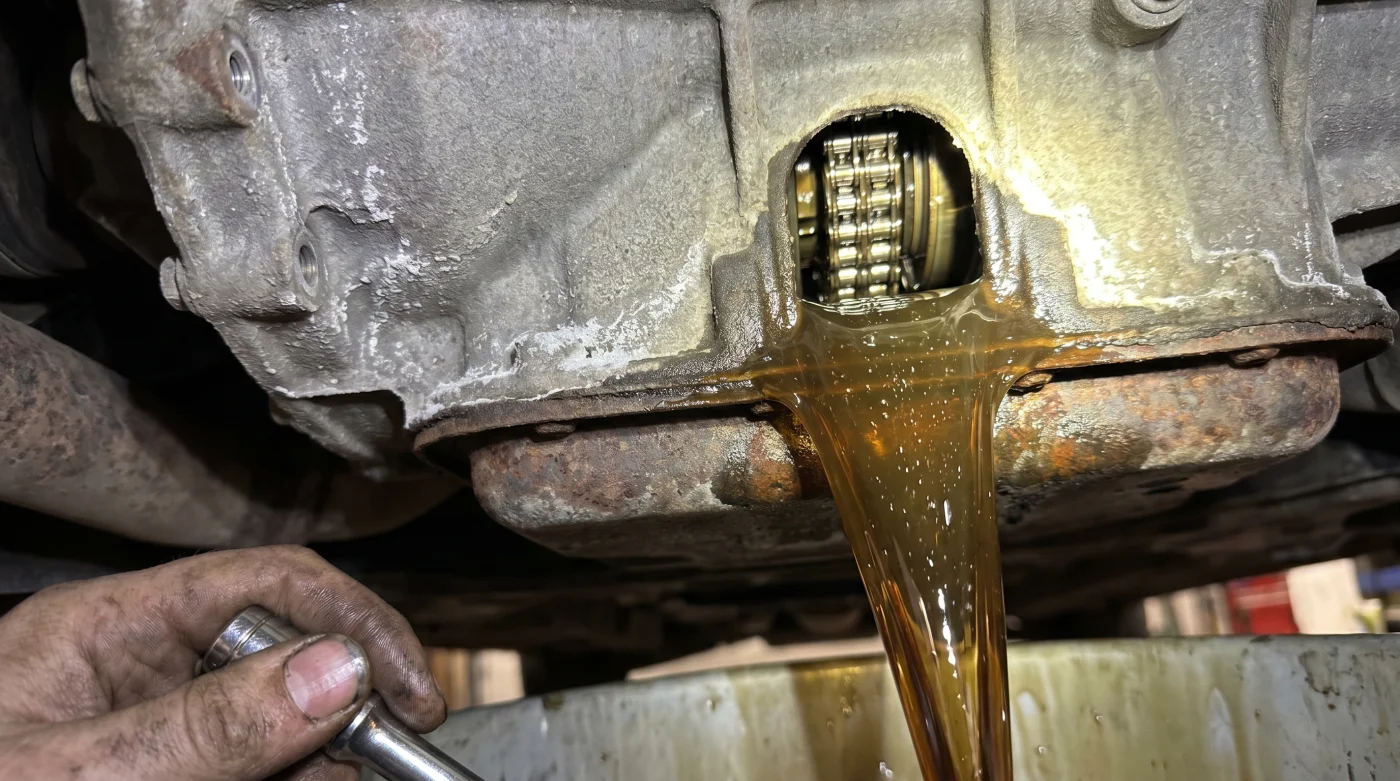
This involves the five-minute rule. When the car is on the lift for an oil change, it takes exactly five minutes to crack the transmission drain plug and assess what comes out. If you are doing a drain and fill, which replaces about half the fluid in the system without shocking the seals, keep these tactical details in mind.
- Match the temperature: CVT fluid expands significantly when hot. Always measure and replace fluid when the transmission is at the specified temperature, usually between 95 and 113 degrees Fahrenheit.
- Measure what drains: Use a graduated catch pan. If three and a half quarts come out, exactly three and a half quarts go back in. Precision prevents the foaming that ruins belt traction.
- Use exact chemistry: Never use a universal automatic transmission fluid. The friction modifiers required for a specific belt are wildly different from those needed for a different brand’s chain.
- Tighten with intention: Thread the drain plug by hand, and finish with a torque wrench. Stripping an aluminum transmission pan turns a simple maintenance task into a nightmare.
The Freedom of Mechanical Empathy
There is a distinct, quiet satisfaction in driving a high-mileage car that feels remarkably new. It removes the low-level anxiety that usually hums in the background of a road trip. When you press the accelerator, you do not brace for a shudder or a whine. You feel a seamless sweep of power, knowing exactly what is happening beneath you.
Ignoring the marketing brochures and giving the machine what it actually needs changes your relationship with the vehicle. You stop viewing the transmission as a mysterious, fragile box waiting to betray you. Instead, you become its active caretaker.
The thirty-thousand-mile fluid change is not an annoying chore. It is an investment in longevity. Giving the system fresh lubrication becomes an act of mechanical empathy that ensures the belt holds tight, the pulleys spin true, and the car carries you far past the two-hundred-thousand-mile mark.
A fluid’s lifespan is measured by the heat it absorbs, not the promises printed in an owner’s manual.
| Myth | Reality | Added Value |
|---|---|---|
| Lifetime Transmission Fluid | Fluid breaks down and loses friction modifiers around 30,000 miles. | Avoids a $4,000 replacement by preserving the steel belt. |
| CVTs are inherently fragile | They are highly sensitive to fluid degradation, not poorly designed. | Allows you to confidently buy and drive CVT-equipped vehicles. |
| Universal fluid is fine | CVTs require exact friction coefficients to prevent belt slippage. | Ensures your pulleys do not get scored, maintaining smooth acceleration. |
Frequently Asked Questions
Is it too late to change my CVT fluid if I am already at 100,000 miles?
If the transmission is not slipping yet, a simple drain-and-fill is usually safe and beneficial. Avoid high-pressure flushes, which can dislodge debris and clog delicate valves.Can I check the CVT fluid level myself?
Many modern CVTs lack a traditional under-hood dipstick. You often have to check it from underneath the vehicle using a specific leveling plug while the engine runs at a precise temperature.Why does my CVT shudder slightly at low speeds?
This is often the first sign of degraded fluid causing the torque converter lock-up clutch or the steel belt to slip momentarily. Fresh fluid can frequently resolve this if caught early.How much should a CVT drain-and-fill cost at a shop?
Depending on the brand of specific fluid required, expect to pay between $150 and $300. It is a minor expense compared to a full transmission rebuild.Does towing completely ruin a CVT?
Not inherently, but towing radically increases fluid temperatures. If you tow regularly, you must cut your fluid replacement interval in half to protect the internal components.